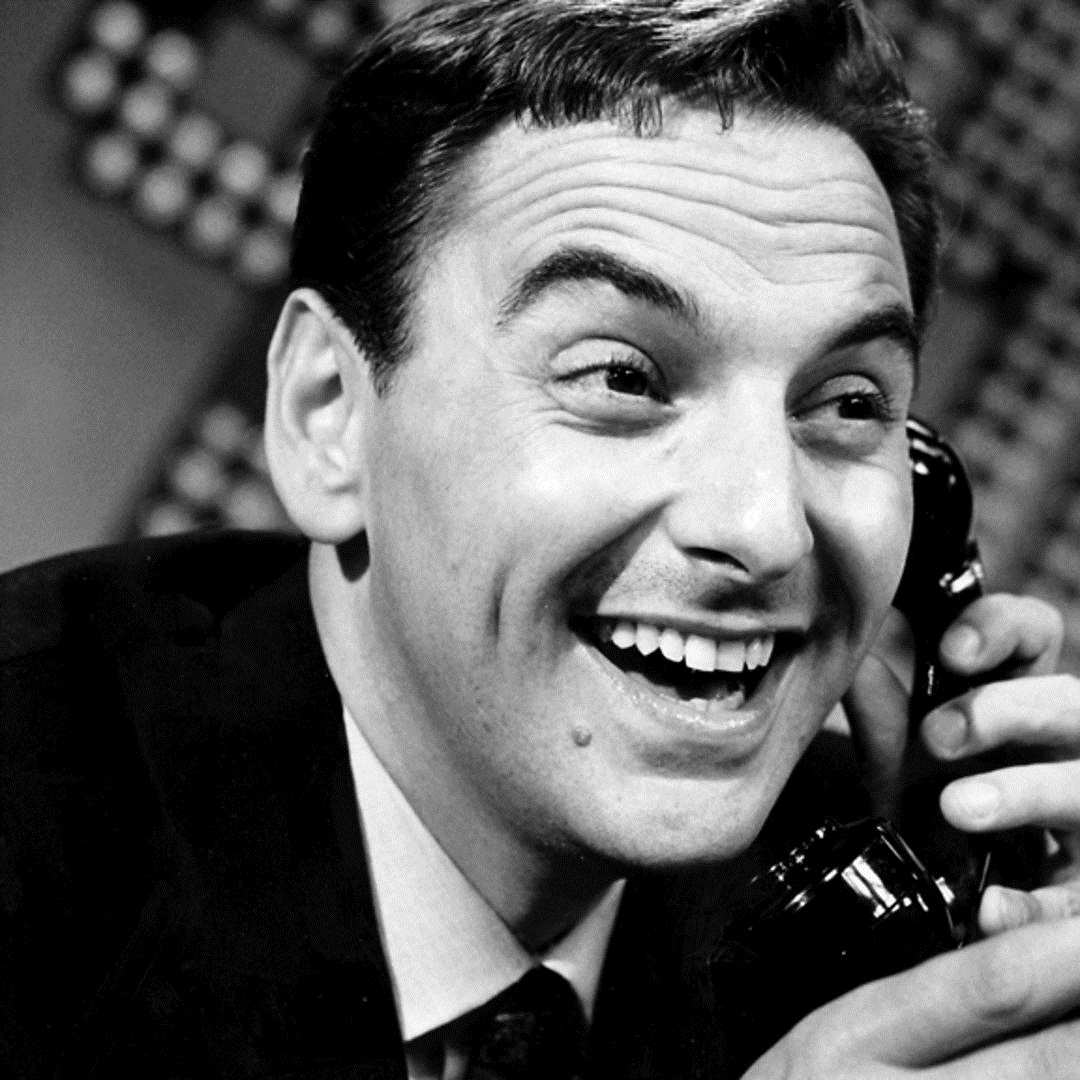
Many remember Bob Monkhouse as a slick game-show host from the 1980s and 90s. But to reduce him to just that would do a great disservice to arguably the greatest gag merchant of all time. This live performance was his swansong.
Despite being filmed in 2003, this performance didn’t air on TV until last year. The basement of the Albany Pub in London was a far cry from the studios of the BBC but provided the intimacy that Bob was looking for. As the camera pans across the crowd you realise that the audience is almost exclusively made up of comedians – ones that were not big names at the time but who have since moved on to greater things as cast members of much loved comedy shows like Smack The Pony, The League of Gentlemen, The 11 O’clock Show, Little Britain and Dead Ringers.
A quick cut to our clown for the evening sees him waiting in the wings where he is gauging the audience, prepping his prop paper and trying to eavesdrop. Bob jokingly informs us that he has always been too stupid to be nervous and with that he turns and walks out on stage.
The first part of this show is Bob in his comfort zone, telling gags, nailing punchlines and building a rapport with his audience. His technique is flawless. It’s like watching an old boxer controlling the ring – the energy may not be what it once was but boy does he know how to throw a jab!
This is a man who has written gags for legends. People like Peter Sellers, Max Miller, Arthur Askey and Bob Hope all came to him for material. The topical gags from the evening have inevitably aged slightly but the self-depreciating material and some of the jovial ‘pops’ at fellow performers would still work today – which is probably why so many of his gags have been stolen…ahem… ‘re-purposed’ by others.
The gags evolve into never-before-heard anecdotes about past comedy peers. His adoration and complete bafflement of Benny Hill, his hatred of Peter Sellers’ mum (‘if you took her for a walk in the woods she’d find truffles’), the actual madness of both Peter Sellers and Tommy Cooper… the list goes on. These are his heroes, his icons and his friends but the anguish of telling these tales for the first time is clear on his face. It’s actually one of the most moving sections of comedy that I’ve ever seen.
Part two is an intimate conversation with impressionist Mike Yarwood, a good friend of Bob’s who walked away from the spotlight and never really returned. The pair banter and share anecdotes like old pals in the corner of a village pub. It’s makes for an interesting interlude but I really just wanted to get back to Bob.
The third part is short and sweet, with Bob taking questions from the audience. Bob gives advice, shares secrets and makes a few jokes. You can see by this time that Bob is beginning to tire, which is hardly surprising, given he was 75 at the time. So he wraps up neatly and a standing ovation is graciously received by one of comedy’s most giving clowns.
Throughout the gig Bob touches on his illness but he keeps the gags coming to soften the severity. A few months after this show was recorded he died of prostate cancer. This truly was his swansong: he had told the stories that he wanted to tell and as a performer famed for his support of young talent he had effectively passed the torch on once more.
‘When I first told people that I wanted to be a comedian, everybody laughed. They’re not laughing now.’
Clown Stars: * * * * *
@The Albany Comedy Club, London
 CLOWNSTER.CO.UK
1 Pingback